Payment Confirmation After a Service Call: A Clear Guide

A payment confirmation after a service call is the record that tells both you and the client the transaction is complete. It closes the loop after payment, reduces confusion, and gives you something concrete to point to if a client later has a question. For service businesses, that simple confirmation is one of the easiest ways to prevent disputes before they start.
What should payment confirmation after a service call include?
The most useful confirmation is short, specific, and easy to match against the client’s bank or card record. That means it needs more than a generic “thanks, payment received” message.
Every confirmation should include:
- Transaction or receipt ID. A clear reference number the client can quote back to you.
- Exact amount and currency. Write the full amount clearly.
- Payment date and time. This helps the client reconcile the payment on their end.
- Payment method. Cash, card, bank transfer, or whatever channel was used.
- Service description. A one-line summary of the work completed.
- Payment classification. State whether it was a deposit, partial payment, or final payment.
If you leave out that last point, clients can easily assume the balance is fully cleared when it is not. That is how simple misunderstandings turn into avoidable follow-up calls.
Pro Tip: Add a support phone number or reply address at the bottom of every payment confirmation. Clients escalate less when the help path is obvious.
Which tools best support prompt payment confirmation?
Speed matters here. The longer it takes a confirmation to go out, the more likely a client is to wonder whether the payment actually went through.
Most service providers end up relying on one of three patterns:
- Processor-triggered confirmations. Card processors often send these automatically when payment is captured.
- Billing-platform confirmations. A billing tool can tie the payment, invoice, and client record together in one place.
- Manual cash or check receipts. When a payment is not instant or digital, you still need a clear record.
| Method | Speed | Best for |
|---|---|---|
| Processor email | Automatic | Card payments |
| Billing platform receipt | Automatic | Invoiced jobs |
| Manual receipt | Under a minute | Cash or check |
| Text follow-up | Very fast | Simple field-service confirmations |
If payment arrives by check or transfer and clearance is still pending, say that clearly. A “payment received, pending clearance” message is much better than confirming final settlement before the money is actually there.

Pro Tip: If you already send digital payment requests, make sure your workflow also sends a confirmation automatically. The request gets the money in; the confirmation closes the loop.
How to write confirmation emails and receipts clients actually trust
Clients trust confirmations that are easy to scan. They do not want a paragraph of thank-you copy. They want the numbers, the status, and the service reference right away.
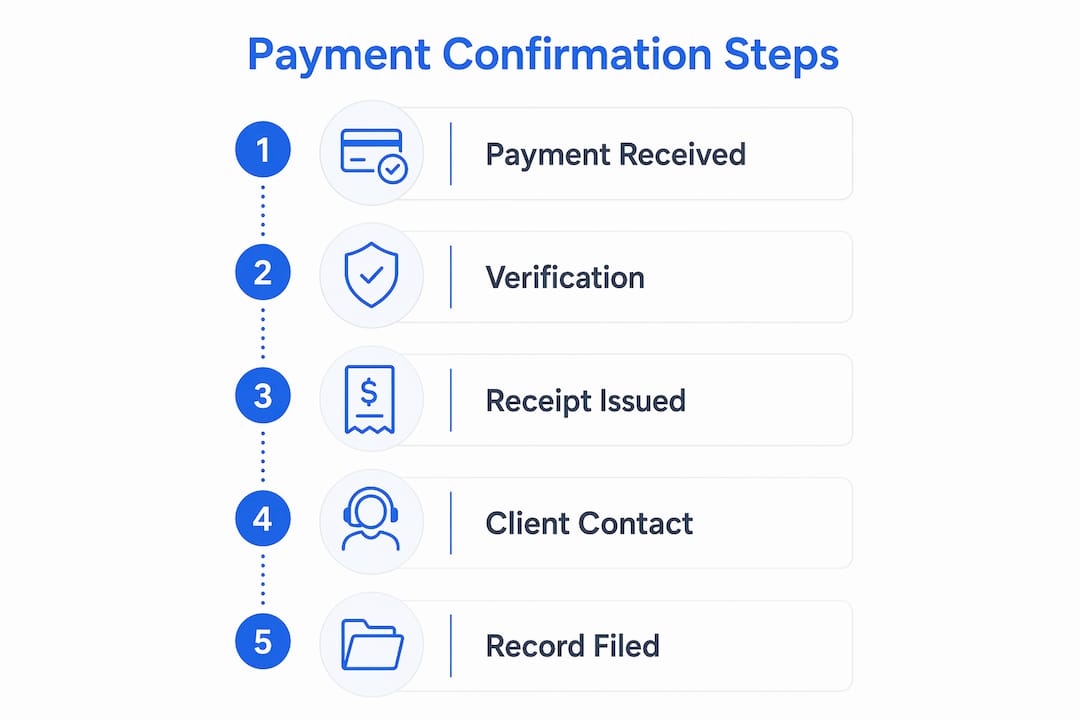
A strong payment confirmation usually follows this order:
- Subject line. Something like “Payment Received: Invoice #1042, $185.00.”
- Payment summary. Amount, date, method, and transaction ID at the top.
- Invoice or work reference. The original invoice number or service-call reference.
- Service description. A plain-language line describing what the client paid for.
- Status. Clear language such as “Paid in full” or “Deposit received.”
- Contact information. Where the client should go if they need help.
The most common failure here is vagueness. “Services rendered” is weak. “Water heater repair at 18 Oak Street” is much better. Precision helps both you and the client months later when no one remembers the exact context offhand.
Pro Tip: Store the confirmation alongside the paid invoice. The pair is much stronger for bookkeeping and dispute resolution than either record on its own.
What mistakes should you avoid with payment confirmation after calls?
The biggest mistake is delay. A client who pays and hears nothing for hours starts to second-guess the payment, and that uncertainty often lands back on your phone.
Other avoidable mistakes include:
- Missing invoice or job references. Without a reference, reconciliation gets messy fast.
- Vague service descriptions. The confirmation should make clear what was actually paid for.
- No payment classification. Deposits and final payments should never look identical.
- Confirming before verifying. Do not mark something final until you have checked that the funds actually cleared.
- No record for cash jobs. Cash without a receipt is a bookkeeping problem waiting to happen.
Treat every payment confirmation like a dispute-prevention document. If the client can match it cleanly to their statement and to the service performed, you have already prevented most problems.
For service businesses, that discipline matters. It saves time on follow-up, reduces awkward conversations, and gives you cleaner records at tax time.
How do payment confirmations improve customer satisfaction?
A clean confirmation gives the client closure. The job is done, the payment is settled, and there is nothing ambiguous left hanging. That feeling matters more than most providers realize.
- Fewer callbacks. Clients do not need to ask whether the payment went through.
- Fewer disputes. The confirmation becomes the shared source of truth.
- Stronger professionalism. A proper receipt looks much more intentional than a stray app notification.
- Cleaner accounting. Every confirmation is also a record for your own books.
- Better repeat business. Clients remember a process that felt organized and easy.
The point is not just administrative neatness. It is trust. A client who receives a prompt, clear, professional payment confirmation is more likely to feel that the whole service experience was handled well.
Key takeaways
A strong payment confirmation after a service call is part of the service itself. It documents the transaction clearly, reassures the client, and gives your business a cleaner record to work from later.
| Point | Details |
|---|---|
| Include the core fields | Reference ID, amount, date, method, service description, and payment classification. |
| Send it fast | Quick confirmations prevent anxiety and reduce client follow-up. |
| Be precise | Specific service descriptions and statuses make the record more useful. |
| Verify before confirming | Do not mark funds final until they have actually cleared. |
| Keep it with the invoice | The confirmation and the invoice belong together for bookkeeping and disputes. |
Why service businesses should stop treating confirmations like an afterthought
A lot of small operators think of the payment confirmation as admin fluff. In reality, it is one of the cleanest ways to reduce confusion and protect revenue. It is not just a courtesy. It is the final proof that the service call, the payment, and the record all line up.
The businesses that get this right do not improvise after the fact. They build confirmation into the workflow so it happens quickly and consistently every time. That alone makes the operation feel more mature and much easier to trust.
Clients do not need ornate wording. They need a clear signal that the payment was received and that the record matches what just happened. That clarity is what good confirmations deliver.
— Carrie Cash
Tendr.me and payment confirmation for service providers
If you are tired of piecing together payment proof from texts, app notifications, and handwritten notes, the real problem is not the payment itself. It is the workflow around it.
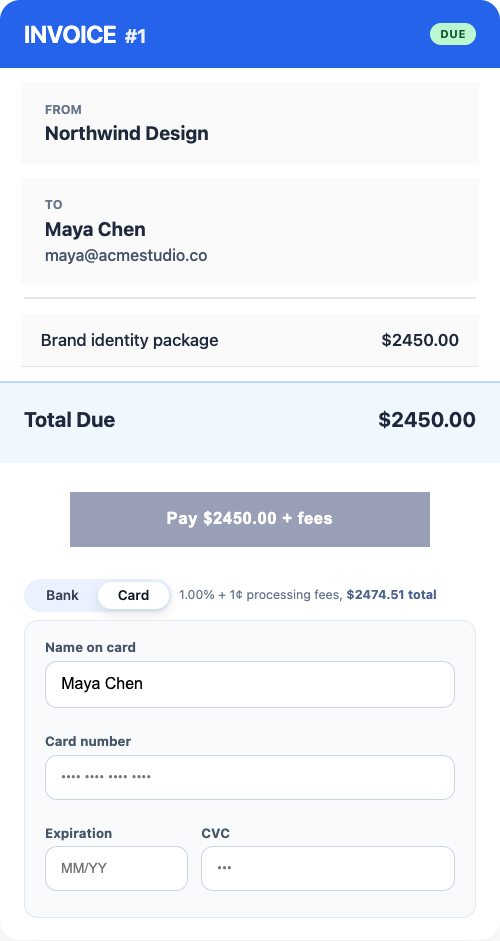
Tendr.me is a free billing platform for small service businesses that want cleaner invoicing, payment requests, and payment records in one place. When a client pays, you should not have to reconstruct the story by hand later.
FAQ
What is a payment confirmation after a service call?
It is the receipt or confirmation message sent after a client pays for a completed service call. It should document the amount, date, payment method, service details, and a transaction reference.
How quickly should a payment confirmation be sent?
Ideally within a few minutes of confirmed payment. Fast confirmations reduce client anxiety and cut down on support calls about whether payment went through.
What details should a service-call payment confirmation include?
Include a transaction or receipt ID, the exact amount, payment date and time, payment method, a short description of the service, and whether it was a deposit, partial payment, or final payment.
Do payment confirmations help prevent disputes?
Yes. A clear confirmation gives the client something they can match to their bank or card statement, which prevents confusion and reduces billing disputes.
Should a payment confirmation replace the original invoice?
No. The confirmation and the invoice serve different purposes. The invoice explains what is owed, and the confirmation proves the payment was received.