Weekly Housekeeping Billing Workflow: Small Biz Guide

A weekly housekeeping billing workflow is the structured process of capturing job details, generating invoices, and collecting payment for recurring cleaning services on a consistent weekly cycle. Most small housekeeping businesses lose real money not from bad clients, but from disorganized billing. Invoices go out late, payment terms stay vague, and tools like Venmo or Cash App fragment your records. The fix is a repeatable system built around automation, standardized rates, and professional invoicing. Tools like Automaid, Connecteam, QuickBooks, and Tendr.me can each play a role, depending on how much accounting overhead you actually want.
What does a weekly housekeeping billing workflow require?
A solid housekeeping billing process starts with the right tools and clean data before you send a single invoice. You need four things in place: scheduling software, a billing or invoicing platform, a way to track job details, and a reliable way to collect payment.
Scheduling and billing software are the foundation. Tools like Automaid handle recurring service scheduling and tie completed jobs directly to billing events. Connecteam covers time tracking and job notes, which feed accurate data into your invoices. For invoicing and payment collection, QuickBooks works for businesses that want accounting integration, while Tendr.me is built for small service providers who want something simple, clean, and fast.

Standardized service packages and rates matter just as much as the software. If every client has a custom price negotiated verbally, billing becomes a guessing game every week. Set clear tiers: standard clean, deep clean, add-on services. Document them. Use those packages as the line items on every invoice.
Client payment authorization is the third piece. Recurring cleanings require integrating scheduling and billing to avoid double-bookings and keep payment collection running without friction. Getting written authorization up front and making payment expectations explicit removes one of the biggest weekly bottlenecks.
Here is a quick comparison of tools commonly used in housekeeping billing setups:
| Tool | Primary Use | Billing Automation | Cost |
|---|---|---|---|
| Automaid | Scheduling + recurring billing | Yes | Paid |
| Connecteam | Time tracking + job notes | Partial | Freemium |
| QuickBooks | Full accounting + invoicing | Yes | Paid |
| Tendr.me | Invoicing + payment collection | Yes | Free |
Pro Tip: Collect payment method details and signed authorization during client onboarding, not after the first job. It removes the awkward ask and sets a professional tone from day one.
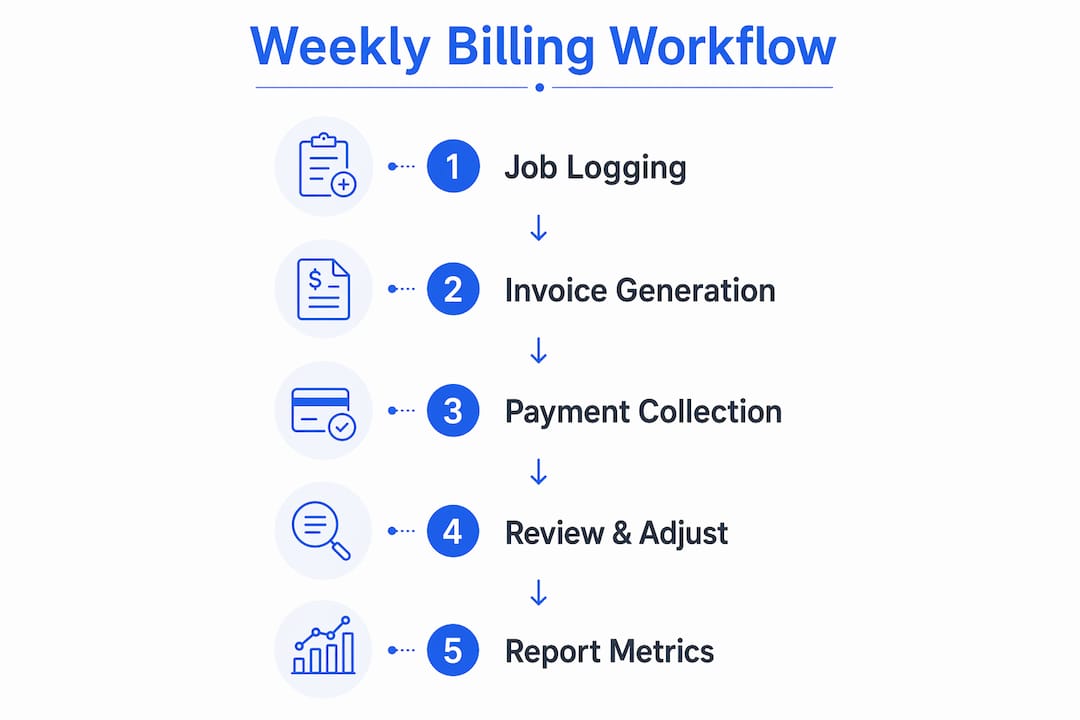
How do you execute weekly housekeeping billing step by step?
The most effective housekeeping billing process follows a fixed sequence every single week. Skipping steps or doing them out of order is where errors and late payments creep in.
- Capture job details on service day. Log the date, time, services performed, and any extras. Use a mobile app like Connecteam or a simple job sheet. Tracking service hours and getting client or supervisor sign-offs minimize billing disputes before they start.
- Generate the invoice same day or on a fixed weekly schedule. Sending invoices immediately or on a consistent schedule reduces payment delays and cuts down on client confusion. Pick one day each week as your billing day and stick to it.
- Apply your standardized service packages as line items. Do not write a new description from scratch every time. Pull from your preset packages. This keeps invoices consistent and speeds up the process.
- Send the invoice through a professional platform. Avoid Cash App or Zelle for this step. They look informal and make record-keeping a mess. A platform like Tendr.me sends a clean, professional invoice and keeps the billing trail in one place.
- Charge promptly when your workflow allows it. For clients with agreed payment terms and a stored payment method in your billing system, collecting promptly after the job keeps cash flow from drifting.
- Send a payment reminder if needed. Set an automatic reminder at 48 hours past due. Automated reminders and clear payment terms dramatically lower late payments and improve collections.
- Reconcile payments weekly. Match every invoice to a payment before the next billing cycle opens. This keeps your records clean and makes tax time far less painful.
Pro Tip: Set your payment terms to “due upon receipt” for weekly clients. Net-30 terms are for contractors, not recurring home cleaning. The shorter the window, the faster you get paid.
What are the most common billing mistakes, and how do you fix them?
Even experienced housekeeping businesses run into the same billing problems. Knowing what they are means you can prevent most of them before they cost you money.
- Manual entry errors. Typing the wrong service, wrong rate, or wrong date happens constantly when invoices are built from scratch each week. The fix is templates and preset packages. Build them once, use them every time.
- Mismatched service records. If your cleaner logs one thing and your invoice says another, clients will dispute it. Job sign-offs from the client or a supervisor create a paper trail that resolves disputes fast.
- Late invoices. Sending an invoice three days after a job is done trains clients to pay slowly. Send it the same day. Clients pay faster when the service is fresh in their mind.
- No follow-up system. Hoping clients pay on time is not a strategy. Build automated reminders into your billing platform so follow-ups happen without you lifting a finger.
- Fragmented payment tools. Using Venmo for one client, Zelle for another, and checks for a third makes reconciliation a nightmare. Consolidate everything into one platform.
Pro Tip: Create a simple billing checklist and run through it every Friday. Five minutes of review catches most errors before invoices go out.
Disputes are easier to handle when your records are complete. Keep a copy of every invoice, every payment confirmation, and every job log. If a client questions a charge, you can respond in minutes with documentation.
How does automation change weekly housekeeping billing?
Automation is the single biggest upgrade you can make to your weekly cleaning invoice management. Manual billing processes suffer from higher error rates and require significantly more staff time. Automation can save hours per week and cut errors at the same time.
The biggest wins come from three areas. First, recurring billing and reusable invoice templates remove the need to manually rebuild an invoice for every repeat client. Second, integrated scheduling prevents the double-bookings and missed appointments that create billing confusion. Third, automated reminders handle follow-up without any manual effort on your part.
Here is how manual and automated billing compare in practice:
| Metric | Manual Workflow | Automated Workflow |
|---|---|---|
| Time spent on billing per week | 6–10 hours | 1–2 hours |
| Invoice error rate | High | Low |
| Average days to payment | 7–14 days | 1–3 days |
| Late payment frequency | Common | Rare |
| Record-keeping quality | Fragmented | Centralized |
The cash flow impact is real. When invoices go out the same day a job is completed and clients have a simple way to pay, money arrives faster and more predictably. That predictability helps you pay your team on time, plan supply purchases, and grow without constant billing drag.
Pro Tip: Start with automating just one part of your billing, such as recurring invoice generation. Once that runs smoothly for a month, add automated reminders. Small steps build a reliable system faster than trying to overhaul everything at once.
Key takeaways
A reliable weekly housekeeping billing workflow depends on automation, standardized packages, and a single professional platform for invoicing and payment collection.
| Point | Details |
|---|---|
| Standardize before you automate | Set fixed service packages and rates before building any billing workflow. |
| Bill the same day, every time | Sending invoices immediately after service completion reduces payment delays significantly. |
| Make payment expectations explicit | Getting payment terms and authorization settled up front reduces friction later. |
| Consolidate your tools | Using one platform for invoicing and payments keeps records clean and reconciliation simple. |
| Automate reminders | Automated follow-ups reduce late payments without any manual effort from you. |
The billing habit that actually separates growing businesses
I have watched a lot of small cleaning businesses stall out at the same point: around five to eight recurring clients. Revenue looks okay on paper, but cash flow feels tight. The culprit is almost always billing lag, not client volume.
The businesses that push past that ceiling share one habit. They treat billing like a service delivery task, not an administrative afterthought. Invoices go out the same day as the clean. Payment terms are set at onboarding. Reminders are automated. The owner does not have to reinvent the process every week.
What I find most interesting is how much client behavior changes when billing is professional and consistent. Clients who used to pay late start paying on time. Not because they suddenly became more responsible, but because a clean, professional invoice with a clear due date and an easy payment path removes every excuse for delay. The friction disappears.
The trend I see accelerating is client self-service. More cleaning businesses are moving toward portals where clients can view invoices, update payment methods, and see their service history without calling or texting. That shift is not just convenient. It reduces disputes, builds trust, and frees up your time for actual cleaning operations.
My honest advice: do not wait until billing becomes a crisis to fix it. Set up a real system now, even if you only have three clients. The habits you build at three clients are the same ones that carry you to thirty.
— Carrie Cash
Stop chasing payments with Tendr.me
If your current billing setup involves texting payment links or logging into three different apps to figure out who paid, Tendr.me is built for exactly that mess.
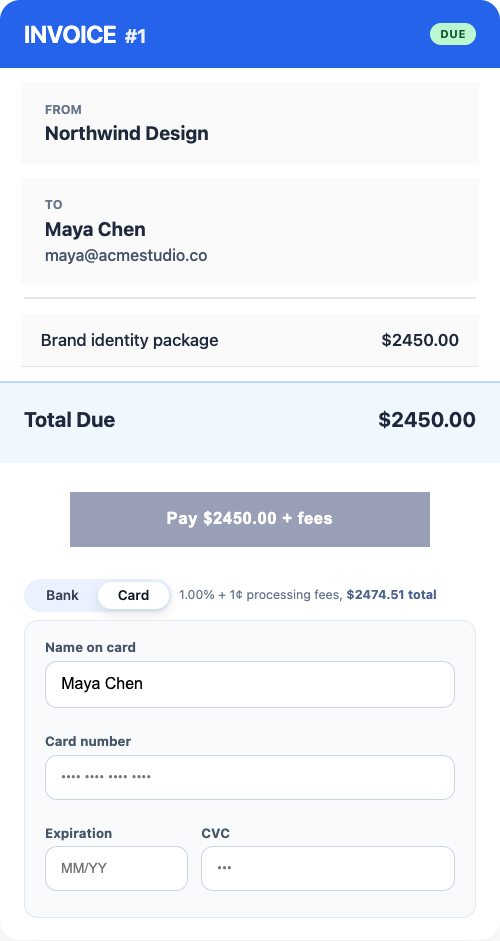
Tendr.me takes minutes to set up. You can send professional invoices, collect payments, and keep everything in one place without the Cash App and Venmo patchwork. For a small housekeeping business, that means less time chasing payments and less time cleaning up records later.
FAQ
What is a weekly housekeeping billing workflow?
A weekly housekeeping billing workflow is the repeatable process of logging completed jobs, generating invoices, and collecting payment on a weekly cycle. It combines scheduling, time tracking, and invoicing into one consistent routine.
How often should I send invoices to recurring cleaning clients?
Send invoices the same day as the completed service or on a fixed weekly billing day. Consistent invoice timing reduces payment delays and keeps clients from forgetting what they owe.
What is the best way to reduce late payments in a cleaning business?
Clear payment terms, fast invoicing, and automated reminders are the strongest combination. If your billing system supports payment authorization and stored payment methods, that can reduce even more friction.
Do I need accounting software to manage housekeeping billing?
No. Full accounting platforms like QuickBooks add complexity many small cleaning businesses do not need. A dedicated invoicing tool like Tendr.me can cover the billing side cleanly while keeping your workflow lighter.
How does automation improve cash flow for housekeeping businesses?
Automation reduces the gap between service delivery and payment collection. When invoices go out instantly and reminders are automatic, payment usually arrives much faster than in a loose manual workflow.