Payment Tracking and Client Disputes: A Small Biz Guide

Payment tracking in client disputes is the practice of keeping organized invoice, payment, and communication records so you can resolve disagreements quickly and reduce financial loss. For small service providers, this is not just bookkeeping. It is often the difference between proving a charge and losing the revenue because the record was too messy to defend.
What are payment disputes, and how do they arise?
A payment dispute happens when a client or their bank challenges a charge. In card systems, the formal term is often “chargeback,” but disputes also happen outside the card rails through direct billing disagreements.
Small service providers usually run into three triggers:
- Billing errors: duplicate charges, incorrect amounts, or invoices sent to the wrong contact.
- Service dissatisfaction: a client claims the work was incomplete, substandard, or never delivered.
- Fraud: a payment method was used without proper authorization.
Each dispute type needs different evidence. A billing error needs the invoice history and correction trail. A service dispute needs delivery confirmation, scope records, photos, or signed agreements. Fraud disputes are more complex and often depend on how the payment was authenticated. Payments authenticated with 3D Secure can shift fraud liability away from the merchant in some card-network contexts.
Disputes also follow deadlines. Issuers and acquirers play different roles, and merchants usually have a fixed response window. Missing that window often means an automatic loss, no matter how right you were on the facts.
How does payment tracking improve dispute resolution?
Organized payment tracking improves your odds because disputes are decided on evidence, and evidence lives in your records.
Here is how a systematic approach changes outcomes:
- Track by invoice, not by client. Tracking by invoice keeps each charge tied to its own evidence instead of turning the dispute into a vague argument about the whole client relationship.
- Centralize dispute communication. Disputes that stay siloed in inboxes lose context and increase deadline risk.
- Gather transaction-specific evidence fast. Generic responses lose. Signed contracts, delivery confirmation, itemized invoices, and timestamped messages win.
- Flag disputed invoices immediately. Standard overdue notices should stop the moment a charge is formally disputed. Continuing the wrong reminder flow muddies the record and frustrates the client.
Pro Tip: Set a calendar alert as soon as a dispute notice arrives. If the deadline is seven days, you do not really have seven days. You have however long it takes to gather evidence and submit it correctly.
Here is a quick comparison of tracking approaches:
| Tracking Method | Evidence Readiness | Deadline Risk | Client Communication |
|---|---|---|---|
| Email only | Low | High | Fragmented |
| Spreadsheet | Medium | Medium | Manual |
| Integrated payment platform | High | Low | Centralized |
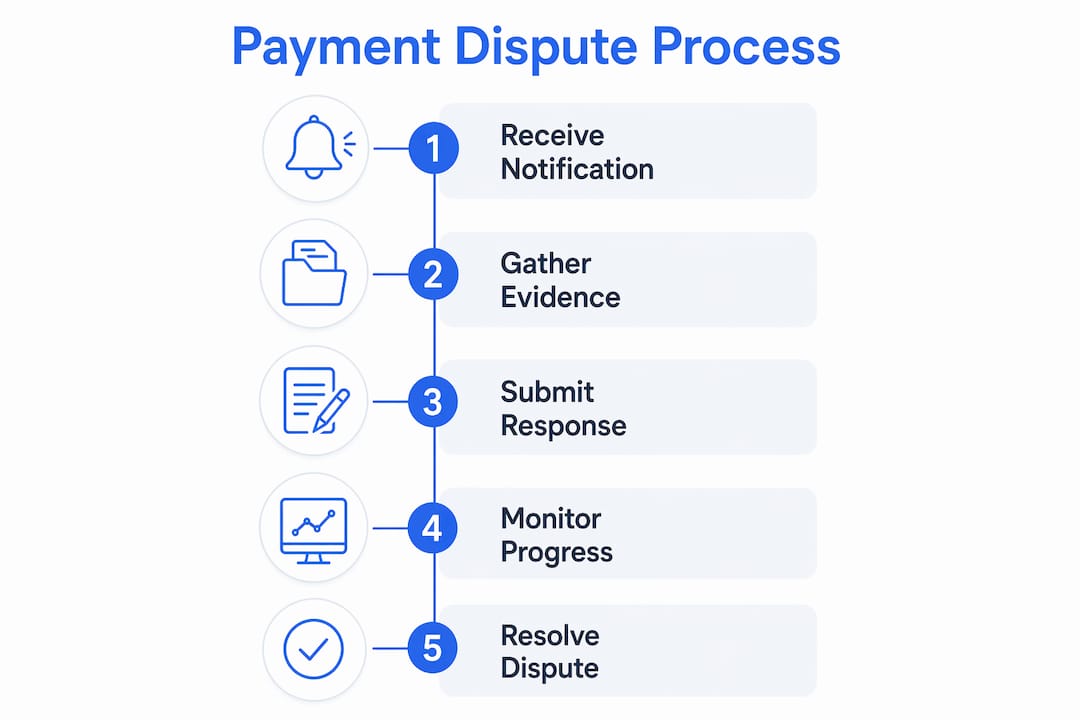
Centralized records matter because they remove the dependency on one person remembering everything. If someone is out sick, the dispute should still be recoverable by whoever picks it up next.
What tools help small businesses track payments and disputes?
The right tools turn dispute management from a reactive scramble into a repeatable process.

Manual spreadsheet tracking for disputes breaks down quickly once a business needs speed, consistency, and cleaner evidence handling. Automated workflows reduce both administrative burden and the risk of missing critical deadlines.
Here is how manual and automated approaches compare:
| Feature | Manual (Spreadsheet/Email) | Automated Platform |
|---|---|---|
| Deadline tracking | Manual calendar entries | Automated alerts |
| Evidence storage | Scattered across folders | Attached to invoice record |
| Client communication log | Email threads | Centralized timeline |
| Dispute status visibility | One person knows | Whole team can see |
| Error rate | High | Low |
For small providers, the practical options range from purpose-built invoicing tools to processor-connected systems with stronger payment histories. The key question is whether you can pull a complete record for one disputed invoice quickly and confidently.
Pro Tip: Before you choose a billing tool, ask: “Can I pull the full transaction and communication trail for one invoice in under two minutes?” If not, it will fail you during a real dispute.
Freelancers and solo providers can start with a digital payment request system that creates a paper trail by default instead of relying on consumer apps that leave no structured record behind.
What steps should small providers take to manage disputes efficiently?
Winning disputes consistently requires a process, not just good intentions. These steps hold up well for small service businesses:
- Write a simple accounts receivable SOP. Document what happens when an invoice goes unpaid and what changes when the invoice becomes disputed.
- Communicate in writing. Every discussion about a disputed charge should leave a written record.
- Assign one owner per dispute. Shared responsibility with no named lead is how deadlines get missed.
- Know when to escalate. Arbitration and formal escalation have real cost, so reserve them for disputes where the amount justifies it.
- Keep records and communication connected. The strongest outcomes happen when invoice history and client messages live in the same workflow.
- Stop chasing and start documenting. Once a charge is disputed, every step should strengthen the evidence file.
A consistent process also prevents some disputes from arising in the first place. Clear, itemized invoices with visible payment terms create fewer surprises and fewer avoidable arguments.
Key takeaways
Systematic payment tracking is one of the best defenses against lost revenue in client disputes because evidence quality and deadline control shape the outcome.
| Point | Details |
|---|---|
| Track by invoice, not client | Invoice-level tracking keeps each dispute tied to its own facts and evidence. |
| Centralize dispute records | Shared records keep deadlines visible and reduce single-person dependency. |
| Automate where possible | Automated alerts and attached evidence reduce both risk and admin burden. |
| Flag disputes immediately | Move disputed invoices into an exception path and stop standard overdue reminders. |
| Know your escalation threshold | Some disputes are worth formal escalation; many are worth resolving quickly and directly. |
The mistake that costs small providers the most
Most small providers think they have a payment problem. What they often really have is a records problem. The dispute was winnable. The evidence just was not ready when it mattered.
The biggest mistake is tracking by client instead of by invoice. A provider may know a client still owes money in the abstract, but if they cannot pull the signed scope, payment history, or delivery record for the exact charge being challenged, they lose leverage immediately.
The second mistake is keeping everything in email. Email is private, siloed, and fragile as a system of record. One staff change or one missed thread and the context disappears.
The third mistake is treating disputes as rare exceptions. Any service business with enough clients will eventually face them. The businesses that handle them best are the ones that built the process before they needed it.
Start with clean invoice records, clean payment records, and a clear dispute path. That foundation matters more than any single tool.
— Carrie Cash
Stop chasing payments. Start tracking them with Tendr.me.
If your current billing setup is a mix of Venmo requests, email threads, and mental notes, you already know the problem. When a client disputes a charge, you need more than a hunch.
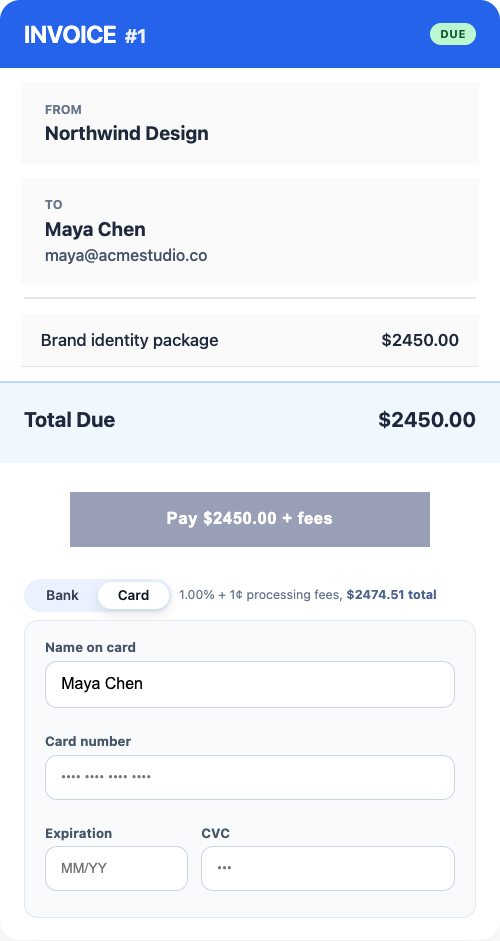
Tendr.me gives small service providers a clean way to send invoices, collect payments, and maintain a readable record for every client. When a charge is questioned, you can pull up the invoice, the payment trail, and the timeline without digging through scattered apps.
FAQ
What is the role of payment tracking in client disputes?
Payment tracking creates the evidence trail needed to respond to disputes accurately and on time. Without it, providers cannot prove what was billed, what was paid, or what was delivered.
How do I resolve a payment dispute with a client?
Gather invoice-specific evidence, including agreements, delivery records, communication history, and payment status. Then respond through the appropriate payment channel before the deadline.
Should I track disputes by client or by invoice?
Always by invoice. Invoice-level tracking keeps the facts clean and avoids confusion from unrelated payments involving the same client.
When does payment dispute arbitration make financial sense?
Usually only when the disputed amount justifies the time and cost of escalation. Many smaller disputes are better resolved directly and quickly.
How does automation improve payment dispute management?
Automation helps track deadlines, attach evidence to invoice records, and keep status visible across the team. That reduces both revenue loss and administrative drag.