Simple Billing Platform: What Small Businesses Need

A simple billing platform is software that helps small businesses create invoices, collect payment, and keep clean payment records without requiring accounting expertise. If you’re currently piecing together Cash App, Venmo, and Zelle to collect payments, you already know the problem. That patchwork approach looks unprofessional, fragments your records, and makes reconciliation harder than it should be. A dedicated billing platform, sometimes called invoicing software or billing software, pulls those tasks into one place. Some businesses want broad accounting suites. Many small service providers just need a cleaner way to bill and get paid.
What is a simple billing platform?
A simple billing platform is software that handles the full payment request cycle: creating invoices, sending them to clients, accepting payment, and tracking what’s been paid. The industry term for this category is invoicing software or billing software, and it covers everything from basic invoice generators to tools with automated reminders and reporting dashboards. What separates a simple billing platform from enterprise accounting software is the learning curve. You should be able to send your first invoice within minutes, not days.
Billing software automates invoicing, payment tracking, and reporting, saving small businesses time and reducing manual errors. That matters because every minute you spend manually tracking who owes you money is a minute you’re not spending on the actual work that earns you money.

What are the core features of a simple billing platform?
The best billing platforms share a common set of features that make everyday invoicing fast and consistent. Here’s what to look for:
- Invoice templates. Pre-built, customizable templates let you send professional invoices in seconds. You fill in the client name, service, and amount. The platform handles the formatting.
- Automated payment reminders. Instead of manually chasing late payments, the platform sends scheduled reminders on your behalf. Automating reminders instead of manual follow-up maintains professionalism and protects cash flow.
- Embedded payment options. Clients should be able to pay directly from the invoice. The strongest platforms support credit cards, ACH bank transfers, and digital wallets. Payment gateways like Square charge 2.6% plus $0.10 per transaction, while Stripe charges 2.9% plus $0.30. Knowing these rates helps you choose a platform that fits your margins.
- Multiple payment methods. Offering digital invoices with embedded payment links, bank transfers, card payments, and ACH reduces friction and gets you paid faster.
- Unified dashboard. A single view of all open, paid, and overdue invoices keeps you organized without spreadsheets.
- Workflow automation. Recurring invoices, auto-scheduling, and real-time notifications remove the manual steps from your billing cycle.
Pro Tip: Set up your invoice template once with your logo, payment terms, and preferred payment methods. Every invoice you send after that takes under two minutes.
How does simple billing software improve payment efficiency?
Manual billing is slow, inconsistent, and error-prone. A simple billing platform fixes each of those problems in a concrete way.
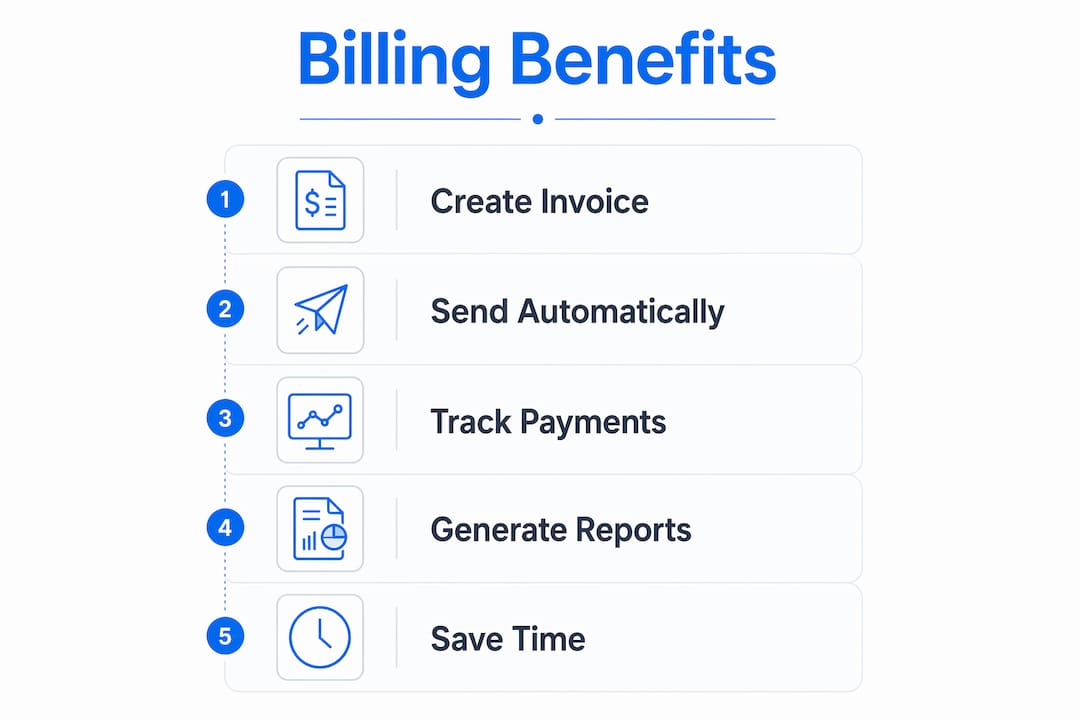
PNC’s 5-step billing workflow for solo earners covers invoice templates, clear payment terms, convenient payment options, automated reminders, and unified tracking. That framework works because it removes every decision point from the billing process. You don’t have to remember when to follow up or which client still owes you money. The system handles it.
The efficiency gains show up in three areas:
- Time savings. Automated invoicing eliminates the manual work of creating, sending, and tracking each invoice individually.
- Fewer errors. Pre-built templates with locked fields prevent the kind of typos and missing information that delay payment.
- Better cash flow. Consistent billing cycles mean predictable income. When clients receive invoices on a regular schedule with clear due dates, they pay on a regular schedule.
“Consistency through templates, payment terms, and automation is key to maintaining professional client relationships and healthy cash flow.” — PNC Insights
Professionalism also plays a role. A cleanly formatted invoice with a direct payment link signals that you run a real business. That perception speeds up payment more than most people expect.
Billing platform comparison: which one fits your business?
Not every billing platform is built for the same type of business. Here’s a direct comparison of the most relevant options for small service providers:
| Platform | Best For | Key Features | Pricing |
|---|---|---|---|
| Tendr.me | Solo providers and small service businesses | Invoice creation, payment tracking, unified records, no setup required | Free |
| SimpleBilling | Small businesses needing growth-focused tools | Real-time payment tracking, automated workflows, invoice creation | Paid tiers |
| Payload | Small and medium businesses needing developer-free payments | Embedded checkout, payment pages, reporting dashboards, real-time notifications | Paid tiers |
| invoicely | Startups and budget-conscious businesses | Invoice creation, payment reminders, basic automation | Free tier available |
| Wave | Freelancers and micro-businesses | Invoicing, accounting, receipt scanning | Free core features |
A few things stand out from this comparison. Tendr.me is the only platform on this list that is completely free with no feature restrictions. Payload is the strongest choice if you need embedded checkout on a website or app. SimpleBilling suits businesses that want growth-oriented reporting alongside invoicing. Wave and invoicely work well for very early-stage businesses, though their automation features are limited compared to dedicated billing tools.
Pro Tip: Before committing to any platform, send yourself a test invoice. If it takes more than five minutes to set up and send, the platform is too complex for everyday use.
For freelancers specifically, understanding digital payment requests can help you decide which features actually matter for your workflow before you choose a tool.
How to choose billing software for your small business
Choosing the right platform comes down to five practical questions. Work through them before you sign up for anything.
- What is your billing volume? If you send fewer than 20 invoices a month, a free tool like Tendr.me or invoicely covers everything you need. Higher volume businesses may benefit from more advanced reporting.
- What payment methods do your clients prefer? Check whether the platform supports credit cards, ACH, and digital wallets. Clients who can pay with one click pay faster than clients who have to log into their bank.
- Does it integrate with your existing tools? If you use QuickBooks, Google Sheets, or a CRM, check for native integrations or export options. Fragmented data is the enemy of clean bookkeeping.
- How fast can you get started? The best easy billing solutions require zero onboarding. If you need a tutorial to send your first invoice, look elsewhere.
- Is the pricing sustainable? Free platforms like Tendr.me remove cost as a barrier entirely. Paid platforms should offer clear value beyond what free tools provide before you commit.
Small business owners who fail to standardize billing workflows create inefficiencies that compound over time. The fix is not a more complex system. It’s a simpler, more consistent one. A weekly billing routine, like the kind outlined in this weekly billing workflow guide, turns invoicing from a chore into a habit that takes 30 minutes a week.
Once you’ve chosen a platform, set your payment terms on day one. Net 7 or Net 14 works better than Net 30 for most service businesses. Shorter terms mean faster cash flow, and automated reminders mean you never have to ask twice.
Key takeaways
A simple billing platform replaces manual invoicing chaos with a consistent, automated workflow that gets small service businesses paid faster and with less effort.
| Point | Details |
|---|---|
| Core definition | A simple billing platform automates invoicing, payment tracking, and reminders in one place. |
| Must-have features | Look for invoice templates, embedded payments, automated reminders, and a unified dashboard. |
| Efficiency gains | Automation reduces errors, saves time, and creates predictable cash flow through consistent billing cycles. |
| Platform choice | Match the platform to your billing volume, client payment preferences, and budget before committing. |
| Free options exist | Tendr.me and invoicely offer free billing tools with enough features for most small service providers. |
Why simplicity in billing is the real competitive advantage
The biggest billing mistake I see small business owners make is not choosing the wrong software. It’s avoiding the decision entirely and defaulting to whatever payment app is already on their phone. Cash App and Venmo are fine for splitting dinner. They are not billing systems. They don’t create records, they don’t send reminders, and they don’t project professionalism to a client who is deciding whether to hire you again.
The second mistake is overcomplicating the fix. I’ve watched solo service providers sign up for full accounting platforms with payroll modules, inventory tracking, and tax filing tools when all they needed was a way to send a clean invoice and get paid. That complexity creates friction, and friction means the system gets abandoned after two weeks.
What actually works is the simplest system you will use consistently. A consistent billing workflow built around templates and automation beats a sophisticated system you use inconsistently every single time. The goal is not perfect accounting software. The goal is getting paid on time, every time, without thinking about it.
For service businesses tracking multiple clients, tools that support client payment tracking make a real difference in staying organized without adding overhead.
— Carrie Cash
Stop chasing payments. Start using Tendr.me.
If you’ve been piecing together consumer apps to manage your billing, there’s a better way. Tendr.me is a completely free billing platform built for small service providers who want professional invoicing without the complexity.
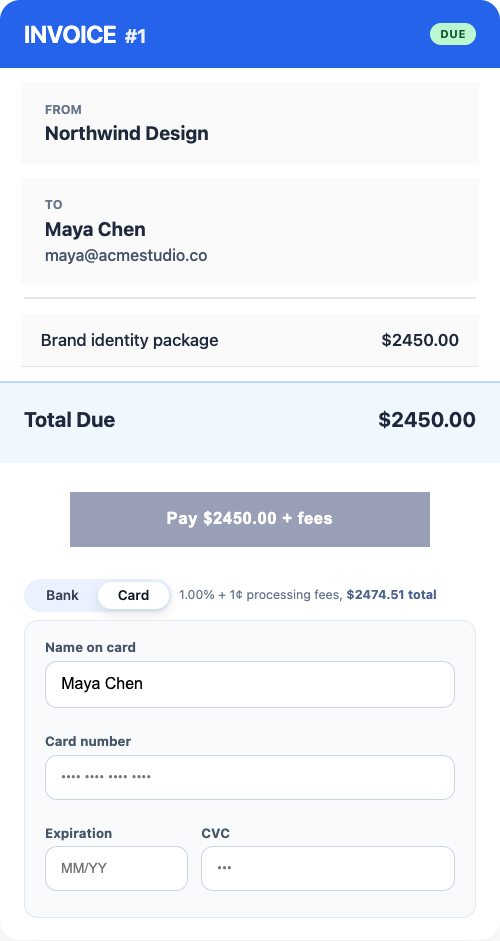
Send your first invoice in minutes. Track every payment in one place. No setup fees, no monthly costs, no learning curve. Tendr.me gives you invoice templates, payment tracking, and a clean record of every transaction, so you always know exactly where you stand. It’s the kind of simple billing tool that replaces your patchwork of payment apps with one system that actually works.
FAQ
What is a simple billing platform?
A simple billing platform is software that automates invoice creation, payment collection, and transaction tracking for small businesses. It replaces manual processes and consumer payment apps with a single, professional system.
How is billing software different from accounting software?
Billing software focuses on invoicing and payment collection, while accounting software covers the full range of financial management including taxes, payroll, and reporting. Most small service providers need billing software first.
What payment methods should a billing platform support?
The strongest platforms support credit cards, ACH bank transfers, and digital wallets. Including multiple payment options on every invoice reduces friction and speeds up payment from clients.
Are there free billing platforms for small businesses?
Yes. Tendr.me is completely free with no feature restrictions. Tools like invoicely and Wave also offer free invoicing features suited to startups and small businesses with limited budgets.
How do i set up digital payment options for clients?
Most billing platforms include embedded payment links directly in the invoice. Clients click the link and pay by card or bank transfer without needing to log into a separate app. The best setup is the one that makes payment obvious and keeps your records in one place.